

Family vs Investor Property in Dubai: What to Buy and Where
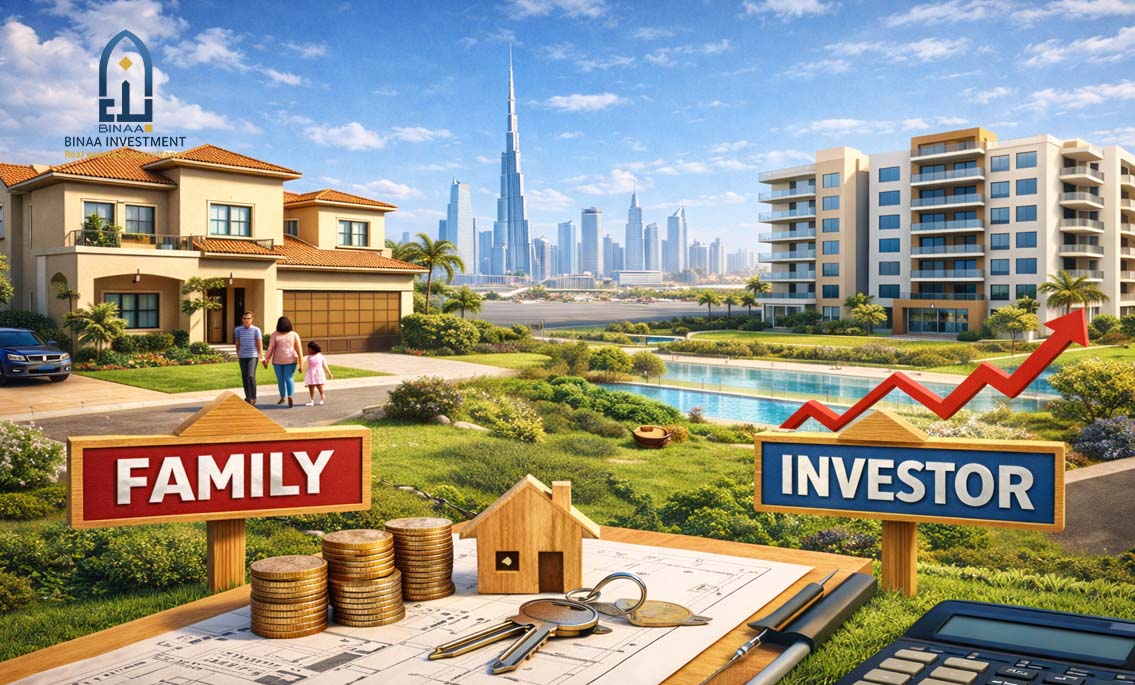
Dubai’s real estate market has matured into a highly segmented ecosystem where buyer intent plays a decisive role in determining the right property choice. In 2026, the distinction between family-oriented residential properties and investor-focused assets is clearer than ever. While both categories operate within the same market, they respond to different demand drivers, lifestyle expectations, and financial objectives. Understanding these differences is essential for making informed purchasing decisions that align with long-term goals rather than short-term assumptions.
Buying a property for family living in Dubai prioritizes stability, livability, and community infrastructure. In contrast, investor-driven purchases focus on yield performance, liquidity, scalability, and exit flexibility. Confusing these two strategies often leads to underperformance, either through lower rental returns or compromised living standards. A clear framework for evaluating what to buy and where is therefore critical in today’s competitive market.
Understanding Buyer Intent in Dubai’s Real Estate Market
Dubai attracts a diverse range of buyers, from long-term residents relocating with families to global investors seeking exposure to a tax-efficient property market. This diversity has driven developers to design projects with very specific target audiences. As a result, not all properties are universally suitable.
Family buyers typically prioritize schools, healthcare access, green spaces, safety, and long-term community planning. Investors, on the other hand, focus on rental demand drivers, price efficiency, short-term absorption rates, and resale liquidity. In 2026, the most successful purchases are those where buyer intent is perfectly aligned with the property’s positioning.
What Defines a Family-Oriented Property in Dubai


Family-oriented properties in Dubai are designed around daily living rather than financial optimization. These homes are usually located within master-planned communities that offer a sense of permanence and social structure. Larger unit sizes, functional layouts, storage space, and privacy are central considerations.
Family properties often include access to parks, playgrounds, walking paths, community centers, schools, and healthcare facilities. Noise control, traffic management, and low-density planning also play a role. In 2026, family buyers increasingly value sustainability, walkability, and community cohesion over centrality or skyline views.
Where Family Buyers Should Focus in Dubai
Areas suited for family living are typically those that prioritize community infrastructure over short-term tourism appeal. These locations often feature villa communities, townhouses, and low- to mid-rise apartment developments.
Suburban master-planned districts remain highly attractive to families due to space availability and calmer environments. These areas support long-term residency, school continuity, and lifestyle stability. Proximity to employment zones is still relevant, but families are generally more tolerant of longer commutes in exchange for better living conditions.
Lifestyle Stability vs Market Liquidity
One of the most important differences between family and investor properties lies in liquidity. Family homes are often held for longer periods and are less frequently traded. Their value is tied to livability and community maturity rather than rapid price movements.
This stability benefits families but can limit flexibility. Selling a family-oriented property may take longer, especially if it is located in a purely residential area with limited investor demand. However, for end users, this is rarely a concern, as the primary objective is quality of life rather than exit timing.
What Defines an Investor Property in Dubai
Investor-focused properties are designed with efficiency and market appeal in mind. These units often feature compact layouts, modern finishes, and pricing structures optimized for yield. The goal is to maximize rental income relative to purchase price while maintaining liquidity in the resale market.
In 2026, investor properties in Dubai are typically found in high-demand rental zones, near business districts, transport hubs, tourism centers, or emerging growth corridors. Flexibility is key, with properties appealing to both long-term tenants and, in some cases, short-term rental markets.
Rental Demand as the Core Investment Driver
For investors, rental demand is the primary performance indicator. Properties that attract a steady stream of tenants reduce vacancy risk and stabilize cash flow. Areas with diverse tenant profiles tend to outperform single-demand locations, as they are less vulnerable to sector-specific downturns.
In Dubai, rental demand in 2026 is driven by population growth, corporate relocations, and international workforce inflows. Investor properties that align with these macro trends benefit from stronger occupancy rates and more predictable returns.
Where Investors Should Buy in Dubai
Investor-friendly areas are typically characterized by strong connectivity, proximity to employment hubs, and flexible rental appeal. These locations often include high-rise developments, mixed-use districts, and transit-oriented communities.
Liquidity is a major advantage in these areas. Investor properties can often be resold more easily due to broader buyer demand, including other investors and first-time buyers. This liquidity supports portfolio rotation and capital reallocation strategies.
Yield vs Appreciation: Different Performance Metrics
Family buyers and investors evaluate performance differently. Families focus on long-term appreciation and lifestyle value, while investors prioritize yield and total return on investment.
In some cases, high-yield properties may offer limited capital growth, while family-oriented homes may appreciate steadily but generate modest rental income. In 2026, understanding this trade-off is essential, as not all properties can optimize both metrics simultaneously.
Risk Profiles and Market Sensitivity
Investor properties tend to be more sensitive to market cycles. Changes in rental regulations, supply dynamics, or tenant demand can directly impact returns. However, investors often mitigate these risks through diversification and shorter holding periods.
Family properties, by contrast, are more resilient to short-term market fluctuations. Families are less likely to relocate based on minor rent or price changes, which supports price stability in residential communities even during broader market adjustments.
Financing and Budget Allocation Considerations
Budget strategy differs significantly between family buyers and investors. Families often allocate a larger portion of income toward housing, prioritizing space and comfort. Financing decisions are typically long-term, with a focus on affordability and payment stability.
Investors, however, evaluate financing in terms of leverage efficiency and return enhancement. Lower entry prices, flexible payment plans, and scalable acquisition strategies are often preferred. In 2026, financing structures continue to influence buyer behavior across both segments.
Community Maturity and Its Impact on Value
Community maturity plays a critical role in determining suitability. Established communities with schools, retail, and healthcare are ideal for families. Emerging areas, while less complete, may offer better pricing and upside potential for investors.
Timing is therefore crucial. Families generally prefer mature or near-complete communities, while investors may target earlier development phases to capture future appreciation.
Short-Term vs Long-Term Ownership Horizons
Ownership horizon is another defining factor. Family buyers typically plan for long-term ownership, often exceeding a decade. Their decisions are influenced by life stages, schooling needs, and lifestyle consistency.
Investors may operate on shorter horizons, adjusting portfolios based on performance, market conditions, or capital needs. Properties that support both long-term leasing and resale flexibility are particularly attractive in this context.
Design Priorities: Space vs Efficiency
Design preferences differ sharply between the two buyer types. Families prioritize spacious layouts, storage, privacy, and functional separation between living areas. Outdoor space, such as gardens or balconies, adds significant value.
Investor properties emphasize efficiency, modern aesthetics, and ease of maintenance. Smaller units with optimized layouts often outperform larger ones in rental yield metrics, particularly in urban environments.
Regulatory and Management Considerations
Property management requirements vary depending on usage. Family homes typically involve lower turnover and simpler management. Investor properties may require active management, especially in competitive rental markets.
In 2026, regulatory clarity in Dubai supports both segments, but investors must remain attentive to leasing frameworks, service charges, and community rules that can affect net returns.
Can One Property Serve Both Family and Investor Goals?
In some cases, properties can serve dual purposes, but compromises are inevitable. A property optimized for family living may generate lower yields, while an investor-focused unit may lack the features families value most.
Hybrid areas, offering balanced infrastructure and rental demand, can bridge this gap. However, buyers should be realistic about priorities and avoid assuming universal suitability.
Strategic Decision-Making in 2026
Dubai’s real estate market in 2026 rewards strategic clarity. Buyers who clearly define whether they are purchasing for family living or investment performance are better positioned to select the right property and location.
Market data, demographic trends, and infrastructure planning all support this segmentation. Aligning purchase decisions with intent reduces risk and enhances long-term satisfaction, whether financial or lifestyle-driven.
Choosing Between Family and Investor Property in Dubai
Choosing between a family home and an investment property in Dubai is not a matter of which is better, but which is more appropriate for your objectives. Family properties offer stability, community, and long-term livability. Investor properties deliver flexibility, liquidity, and income generation.
In 2026, Dubai offers well-defined opportunities for both segments. Success lies in understanding the differences, respecting the trade-offs, and selecting locations and property types that align precisely with buyer intent. By doing so, buyers can avoid misaligned purchases and build value—whether measured in quality of life or financial return—over the long term.