

Istanbul Canal: The Next Strategic Real Estate Investment Frontier in Turkey
Few infrastructure projects in Europe and the Middle East have generated as much discussion, anticipation, and strategic positioning as the Istanbul Canal. From a real estate and investment perspective, this megaproject represents far more than a new waterway connecting the Black Sea to the Sea of Marmara. It signals the creation of an entirely new urban axis in one of the world’s most historically resilient and commercially strategic cities — Istanbul.
For international investors, Istanbul Canal is not simply an infrastructure development; it is a long-term capital growth corridor. The project is reshaping land values, urban density, zoning strategy, and investor psychology across key districts on the European side of the city. Understanding its implications requires looking beyond headlines and analyzing the structural economic, demographic, and urban transformation taking place around it.
This article provides a comprehensive, investor-focused analysis of Istanbul Canal, examining its strategic importance, property market dynamics, risk factors, and long-term appreciation potential.
Understanding the Strategic Vision Behind Istanbul Canal
Istanbul has historically been a maritime gateway between Europe and Asia, with the Bosphorus Strait serving as one of the world’s most critical shipping routes. However, maritime congestion and safety concerns have long created pressure for an alternative passage.
The Istanbul Canal project was introduced to:
Reduce traffic pressure on the Bosphorus
Increase maritime safety
Enhance Turkey’s geopolitical and economic leverage
Stimulate new urban development zones
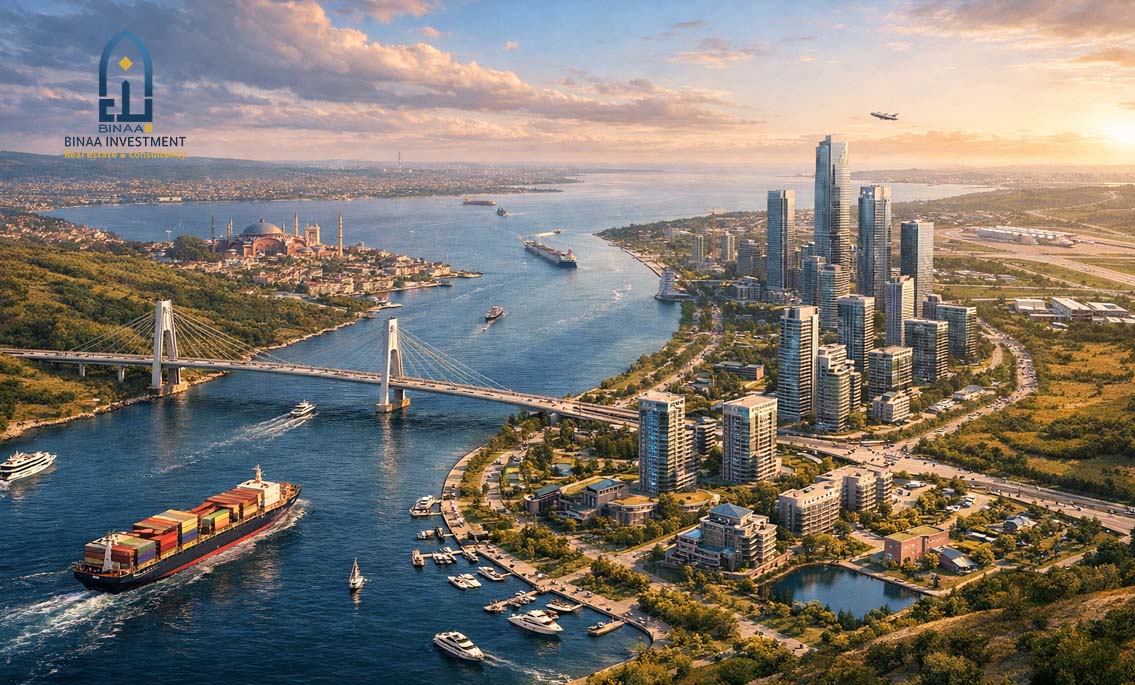
From an investor’s standpoint, infrastructure drives real estate. Wherever transportation corridors expand, land appreciation typically follows. Istanbul Canal is designed to be approximately 45 kilometers long, cutting through developing districts on the European side and creating a new waterfront axis.
Waterfront real estate globally commands premium pricing. The canal effectively introduces new waterfront inventory in a city where coastal land is limited and highly valued.
Why Infrastructure Megaprojects Drive Real Estate Appreciation


Real estate markets respond strongly to infrastructure-led urban expansion. Globally, similar projects have triggered substantial appreciation in surrounding districts.
Consider:
The expansion of new business districts in Dubai around Dubai
The transformation of industrial areas near Canary Wharf in London
The regeneration impact of marina developments across the Gulf region
Infrastructure creates three major investment catalysts:
Improved accessibility
New zoning opportunities
Perceived long-term state commitment
Istanbul Canal embodies all three.
Key Investment Zones Around Istanbul Canal
The primary districts affected by the project include:
Arnavutköy
Başakşehir
Küçükçekmece
Avcılar
Each of these areas offers distinct investment profiles.
1. Arnavutköy – Early-Stage Land Banking Opportunity
Arnavutköy has historically been undervalued due to its semi-rural characteristics. However, proximity to both Istanbul Canal and Istanbul Airport dramatically alters its investment outlook.
Investor appeal:
Land acquisition potential
Villa developments
Long-term capital appreciation
Land prices in early-phase megaproject corridors tend to multiply as zoning clarity improves and construction advances.
2. Başakşehir – Structured Urban Growth
Başakşehir already benefits from modern residential complexes, organized urban planning, and proximity to healthcare hubs and transportation infrastructure. It attracts both domestic middle-upper income buyers and foreign investors.
Advantages:
Stable rental demand
Strong infrastructure network
Proximity to future canal-linked transport routes
This district offers a more balanced risk-return profile compared to raw land plays.
3. Küçükçekmece – Waterfront Premium Potential
The canal is expected to pass through or near Küçükçekmece Lake, effectively transforming the surrounding micro-markets into waterfront zones. Waterfront branding increases both short-term demand and long-term resale value.
Investors targeting mid-term resale opportunities should closely monitor this zone.
Impact on Property Prices and Appreciation Trends
Since the announcement of Istanbul Canal, surrounding districts have experienced noticeable land price increases. Historically, announcement phases trigger speculative interest. However, true value realization typically occurs in:
Infrastructure commencement phase
Zoning clarification stage
Transportation integration stage
The canal is integrated with highways, metro lines, and bridge networks, enhancing connectivity between new and established parts of Istanbul.
Long-term drivers of appreciation include:
Population growth in Istanbul (over 15 million residents)
Continued foreign property demand in Turkey
Citizenship-by-investment programs
Urban migration patterns
Foreign Investor Perspective
Turkey remains attractive for foreign real estate investors due to:
Competitive price per square meter compared to Europe
Strong rental yields in metropolitan areas
Currency advantage for USD, EUR, and GCC-based buyers
Citizenship eligibility thresholds
Istanbul Canal adds a narrative of “future city expansion,” which is particularly appealing to Gulf and Asian investors who understand infrastructure-led appreciation models.
The Turkish Citizenship by Investment program, managed under the regulations of the Government of Turkey, has historically increased demand in strategic development zones. Investors purchasing properties near future landmark projects often benefit from dual incentives: residency/citizenship eligibility and capital appreciation.
Rental Yield vs Capital Growth Strategy
Investors approaching Istanbul Canal must choose between:
Strategy A: Capital Appreciation (5–10 Year Horizon)
Buy early in developing zones (Arnavutköy)
Focus on land or pre-construction
Accept lower short-term liquidity
Strategy B: Hybrid Rental + Growth (3–7 Year Horizon)
Invest in established residential complexes in Başakşehir
Target family-oriented developments
Generate rental income while waiting for broader area appreciation
Rental yields in outer European districts of Istanbul typically range between 4–7% annually depending on project quality and property management efficiency.
Infrastructure Synergy: Airport, Highways, and Metro Integration
One of the strongest investment arguments is synergy. The canal does not exist in isolation.
It is geographically aligned with:
Istanbul Airport
Northern Marmara Highway
Planned metro expansions
The presence of Istanbul Airport alone has already shifted investor gravity northward. The combination of global aviation hub + artificial waterway + modern housing projects forms a multi-layered appreciation framework.
Connectivity reduces risk. When an area is supported by multiple infrastructure pillars, its long-term resilience improves significantly.
Risk Factors Investors Must Consider
No megaproject is without risk. Serious investors should evaluate:
Political continuity and policy stability
Environmental discussions surrounding the canal
Construction timeline execution
Speculative overpricing in early stages
Liquidity cycles in Turkey’s property market
Real estate in Istanbul remains cyclical. Investors entering purely on hype without analyzing zoning plans and developer credibility may face short-term volatility.
Working with established developers and conducting due diligence is critical.
Comparison: Istanbul Canal vs Traditional Central Istanbul Investments
Central districts like Şişli or Beşiktaş offer:
Mature rental markets
Lower speculative volatility
Limited land supply
However, growth rates in central districts are slower compared to emerging corridors. Istanbul Canal represents expansion, not consolidation.
For investors seeking aggressive growth, expansion zones historically outperform mature districts over a 10-year cycle.
Long-Term Vision: A New Urban Identity
Beyond economics, Istanbul Canal represents a psychological shift. It symbolizes Turkey’s ambition to create a new strategic axis parallel to the Bosphorus.
Urban planning projections include:
Smart city infrastructure
Luxury residential developments
Marina projects
Commercial and logistics hubs
Over time, such transformation can reposition Istanbul’s European side into a two-waterfront city model.
Water adjacency is one of the most powerful real estate value drivers globally. Scarcity combined with infrastructure creates pricing power.
Who Should Invest in Istanbul Canal Real Estate?
Ideal investor profiles:
Long-term capital growth investors
Gulf-based buyers seeking diversification
Investors targeting Turkish citizenship
Land banking investors
Portfolio diversifiers seeking exposure to emerging megaprojects
It may not be suitable for:
Short-term flippers
Highly risk-averse investors
Buyers dependent on immediate high rental cash flow
Strategic Investment Recommendations
For serious investors evaluating Istanbul Canal opportunities:
Prioritize projects with clear title deeds
Analyze zoning status carefully
Avoid purely speculative land without documentation
Focus on infrastructure proximity
Consider phased entry strategy (buy in stages)
Diversify between land and residential units
Timing matters. Early positioning often yields maximum appreciation — but only when backed by structured analysis.
Conclusion: Is Istanbul Canal a Smart Investment?
From a strategic, long-term perspective, Istanbul Canal represents one of Turkey’s most significant real estate transformation corridors.
The project integrates:
Infrastructure expansion
International trade positioning
Urban development planning
Foreign investment attraction
While short-term volatility may exist, the structural drivers — population growth, infrastructure density, waterfront scarcity, and global investor interest — support a strong long-term appreciation thesis.
For investors with a 5–10 year horizon and proper due diligence, Istanbul Canal offers a calculated growth opportunity rather than a speculative gamble.
In global real estate cycles, wealth is often built in expansion corridors before they mature. Istanbul Canal stands today where many global waterfront districts once stood: early, debated, and full of potential.
For forward-looking investors, that is precisely where opportunity begins.