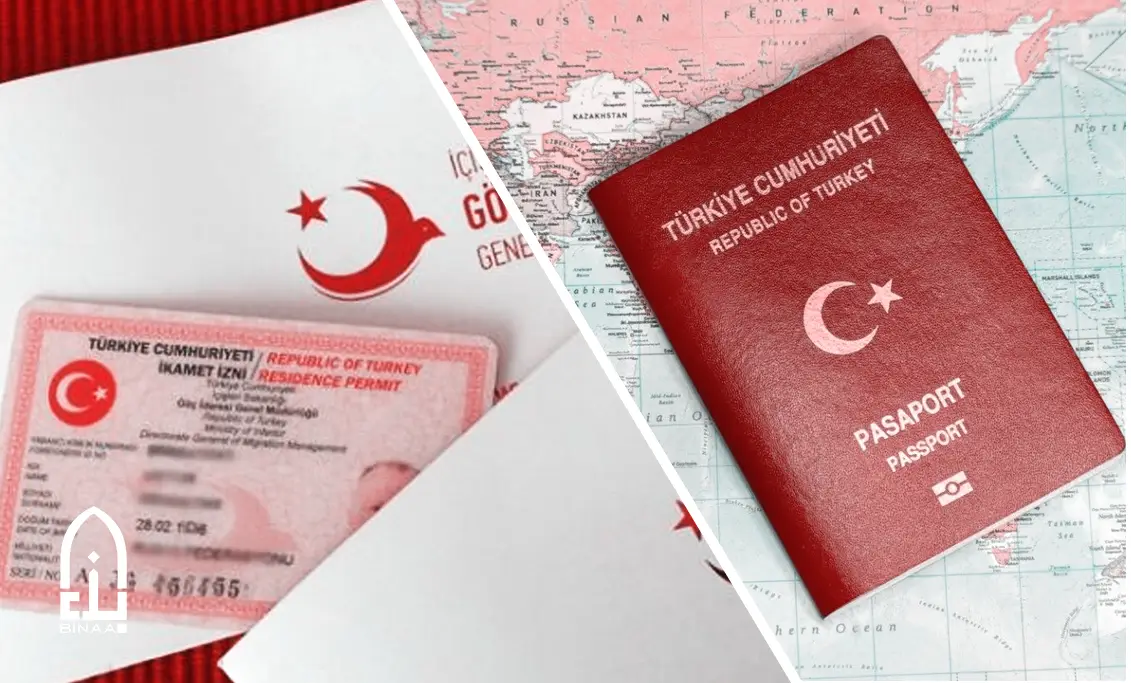




Most articles about Turkish citizenship by investment describe the process as if it always works. It usually does. But not because it's easy — because the files that succeed are the ones where someone prevented the failures most buyers never see coming.
The truth no agent advertises: a meaningful share of self-managed citizenship files in 2026 hit a wall somewhere between the SPK valuation and the conformity certificate. Sometimes they recover. Sometimes they don't. The investors who lose money on this aren't unlucky — they're under-prepared.
This guide is the operational checklist of mistakes we've seen kill, delay, or quietly degrade citizenship files in Istanbul during 2025 and 2026. Some are obvious. Most are not. Read it before you sign anything.
Quick Answer
What are the most common reasons Turkish citizenship applications fail or get delayed? The five recurring causes in 2026: (1) Land Registry valuation falling short of USD 400,000, (2) incorrect SWIFT routing or missing Central Bank (DAB) conversion, (3) buying in a restricted postcode flagged under the 2024 amendment, (4) seller-history breaches (previous Turkish-national ownership chain), and (5) apostille or sworn-translation errors on family documents.
Key Takeaways
- Most rejections are documentation issues, not investment-quality issues.
- The single most common file-killer is valuation shortfall, not application speed.
- The 2024 zoning amendment has restricted several Istanbul postcodes — many buyers still don't know about them.
- Off-plan buyers face a unique trap: developer Tapus issued before completion can fail conformity if the Iskan isn't ready.
- Files run by experienced advisors clear in 3–4 months. Self-managed files commonly run 6–9 months — or fail.
Pre-Purchase Mistakes (Where Most Files Already Die)
Mistake 1 — Treating the Asking Price as the Citizenship Number
Citizenship eligibility is measured against the official Land Registry valuation in USD, not the contract price. Yet buyers — and quite a few agents — still anchor on the price tag. A property listed at $420,000 can appraise at $385,000 on transfer day. The file is dead before it starts.
Binaa Expert Insight: In the central-Istanbul markets we monitor (Şişli, Beşiktaş, Kadıköy, Ataşehir), valuation variance against asking price ran 4–12% in 2025. Always build a 7–10% valuation cushion into your budget. If a property only works at exactly $400K, it doesn't work.
Mistake 2 — Buying in a Restricted Postcode
The 2024 amendment restricted foreign sale at citizenship-qualifying valuations in several Istanbul postcodes — mostly outer growth zones where over-issuance was creating market distortions. Some agencies still market properties in those zones without disclosing the restriction.
Reality Check: This is the single most under-discussed risk in the market. A property can be perfectly legal to buy and still ineligible to count toward citizenship. Cross-check the postcode against the current restricted list before the SPK valuation, not after.
Mistake 3 — Ignoring the Seller's Ownership Chain
The regulation prohibits citizenship-qualifying purchase from a seller who previously owned the property under a Turkish ID — meaning the same individual cannot recycle a unit by transferring it to a foreign-owned company and reselling it. We have seen this come up surprisingly often on resale stock from individual sellers.
What Most Investors Miss: This isn't a theoretical risk. It is one of the more common reasons resale files get bounced. Always run the seller's ownership history at the Land Registry before signing.
Mistake 4 — Skipping the Iskan Check on Ready Stock
A "ready" property without an Iskan (occupancy permit) is not legally ready. The Tapu may transfer, but the conformity certificate will stall. Some developers issue Tapus before Iskan to accelerate sales — usually with assurances that "it's coming in a few weeks." It often isn't.
The deeper market context for which projects, districts, and developer profiles avoid this trap altogether is covered in the best citizenship-eligible properties in Istanbul article — natural internal-link opportunity for any anchor referencing project shortlists.
Transaction Mistakes (Where Files Get Quiet Damage)


Mistake 5 — Routing the SWIFT Transfer to the Wrong Party
Funds must flow from the buyer's international account to the buyer's Turkish account, be converted into Turkish lira at the Central Bank of Türkiye, and only then move to the seller. Buyers occasionally try to short-cut this — wiring directly to the seller, or to a developer's foreign account — and then discover the conformity certificate cannot be issued without the proper Central Bank receipts (DAB).
Common Buyer Mistake: We thought it would be faster if the money went directly to the developer." It is not faster. It disqualifies the file.
Mistake 6 — Forgetting the DAB (Foreign Currency Purchase Document)
The DAB is the document proving the foreign currency was converted at the Central Bank. Without it, the citizenship file cannot progress at Step 6 (conformity certificate). Some banks issue it automatically, some do not. Roughly 1 in 6 self-managed files we've reviewed had a missing or wrongly-formatted DAB.
Binaa Expert Insight: Always request the DAB explicitly in writing on the day of conversion. Many bank branches treat it as optional documentation. It is not.
Mistake 7 — Splitting the Purchase Across Two Tapu Days
If you're combining multiple properties to reach the $400,000 threshold, all Tapus must transfer on the same calendar day. We've watched investors transfer two units on consecutive days assuming it would be fine. It isn't. The valuation is read as two separate sub-$400K transactions, and the file is disqualified.
Mistake 8 — Underestimating the Title Deed Transfer Tax
The 4% transfer tax (typically 2% buyer / 2% seller) is negotiable but rarely waived. Buyers sometimes assume the seller will absorb the full 4%. They almost never do. Build the buyer's 2% (about $8,000 on a $400K property) into the budget from day one, alongside the other transaction costs.
Mid-Article CTA — Get the File Audited Before It Goes In
The 12 mistakes in this guide are the ones we've seen kill or delay real files. Most are invisible to first-time buyers. Binaa Investment offers a free file pre-audit — we review your valuation, SWIFT routing, DAB, Tapu annotation, and conformity package before submission. It's the cheapest insurance policy in the entire process.
The Complete Guide to Obtaining Turkish Citizenship in 2026
Documentation Mistakes (The Quiet Killers)
Mistake 9 — Apostille and Translation Gaps
Every non-Turkish document — birth certificates, marriage certificates, criminal record clearances, passports — must be apostilled in the country of origin and sworn-translated into Turkish by a Turkish-licensed translator. Three frequent failure points:
Children's birth certificates apostilled but not re-issued from the civil registry within the validity window the consulate requires.
Marriage certificates apostilled in the country of marriage rather than the country of current residence.
"Notarised translations" from the home country rather than sworn translations from a Turkish-licensed translator. These are not interchangeable.
Reality Check: Document errors are boring, slow, and the leading reason files lose 4–8 weeks. They're also the easiest to prevent. Front-load this work before you even shortlist a property.
Mistake 10 — Inconsistent Name Spellings Across Documents
Different transliterations of an Arabic, Cyrillic, Chinese, or Farsi name across passport, marriage certificate, SWIFT receipt, and Tapu will be flagged. The system is unforgiving on this — one extra letter, one missing accent, and the file pauses for clarification.
What Most Investors Miss: Confirm the exact spelling on your passport, then enforce that spelling on every document the file will touch — including the SWIFT remittance name and the Turkish bank account name. Banks will sometimes auto-translate. Stop them.
Mistake 11 — Skipping or Late-Filing the Investor Residency Permit
Citizenship cannot be granted without the short-term investor residency permit. It is a separate application, with its own timeline (1–2 weeks), and it must be in place before the citizenship file is submitted. Buyers occasionally treat it as a formality and file it late — adding weeks to the total timeline.
Mistake 12 — Acting As If the 3-Year Restriction Is a Suggestion
The 3-year no-sale restriction is annotated directly on the Tapu. It is not advisory. We have seen buyers try to refinance, transfer to a family member, or arrange a structured exit before the 3 years are up — sometimes via creative legal structures sold to them by less-than-careful intermediaries. The Land Registry catches it. Citizenship can be revoked.
Binaa Expert Insight: Treat the 3-year hold as a structural feature of the investment, not a constraint to be managed around. If a 3-year minimum hold doesn't work for your portfolio, the Turkish CBI program isn't the right vehicle. There is no clever way around it.
The Pattern Behind 90% of Rejections
If you compress these 12 mistakes into the patterns we see most often, three categories absorb the overwhelming majority of file failures in 2026:
Category | Share of failures (est.) | Where it surfaces |
Valuation shortfall | ~35% | Step 3 (SPK appraisal) |
Documentation / apostille errors | ~30% | Step 6 (conformity certificate) |
SWIFT + DAB routing | ~20% | Step 6 (conformity certificate) |
Seller history / restricted zone | ~10% | Step 5 or 6 |
Timeline / sequencing errors | ~5% | Steps 7–8 |
Every category in this table is preventable upstream. The single highest-leverage intervention is a pre-audit conducted before the SPK valuation is ordered — when the file can still be reshaped without consequence.
Market Observation: Self-managed files we've informally surveyed in 2025–2026 had a delay rate roughly three times higher than advisor-managed files, primarily concentrated in Step 6. The cost of the advisor is recovered many times over in timeline alone — most investors discover this only after their first rejection.
For investors structuring multi-property files or layering the citizenship purchase with other rental units in higher-yield districts, the parallel reference is the most profitable areas in Istanbul article — natural anchor opportunity for any phrase about yield-while-you-hold.
A Realistic Look at What Goes Right vs. Wrong
The Turkish CBI program is one of the most operationally mature CBI routes in the world. It works. But "works" hides a distribution: the median experience is fine, the top quartile is excellent, and the bottom quartile is genuinely painful — typically because of the mistakes above.
Honest trade-offs investors should accept going in:
- The 3-year holding period is real and unforgiving.
- The conformity certificate timeline (4–8 weeks) is bureaucratic and largely outside an investor's control.
- Some peripheral districts that look attractive on yield are restricted or valuation-fragile for citizenship.
- The SWIFT-Central Bank routing adds friction. It is also the part that is easiest to get wrong if no one is watching.
None of this should deter a well-informed investor. It should shape who runs the file.
FAQ — Turkish Citizenship Application Mistakes
Q: What is the number-one reason Turkish citizenship applications get rejected?
A: Land Registry valuation shortfall — the official appraisal coming in below USD 400,000. Most other failures are documentation issues at the conformity certificate stage.
Q: Can a rejected citizenship file be re-submitted?
A: Yes, in most cases. Documentation errors can be corrected and re-filed. Structural problems — a property in a restricted zone, a seller-history breach, or an under-valuation — usually require changing the property.
Q: How long do these mistakes typically add to the timeline?
A: Documentation errors add 4–8 weeks. Valuation shortfalls usually mean starting over with a different property and add 2–4 months. SWIFT/DAB errors are sometimes recoverable in 2–4 weeks.
Q: Are these mistakes more common with new-build or resale properties?
A: Resale properties carry higher seller-history and valuation risk. New-build from Tier-1 developers is more predictable, which is why most successful citizenship files concentrate there.
Q: Can my lawyer alone prevent these errors?
A: A property lawyer can prevent transactional and documentation errors. They typically cannot pre-screen valuation behaviour, zoning restrictions, or developer execution risk — those require active investment advisory.
Q: What does a "file pre-audit" actually check?
A: The valuation cushion, SWIFT routing logic, DAB issuance, name consistency, apostille validity, sworn translations, seller ownership chain, property's zoning status, and Iskan / Tapu sequencing.
Q: Is the 3-year restriction really enforced?
A: Yes. It is recorded on the Tapu itself and any sale, mortgage, or transfer is blocked at the Land Registry during the restriction period. Citizenship has been revoked in confirmed cases of breach.
Q: Can a buyer recover funds if a citizenship application fails?
A: The property remains the buyer's asset — funds aren't lost. But the citizenship benefit is forfeited unless the file can be corrected. This is why prevention matters more than remediation.
Conclusion — The Mistakes Aren't Random. The Good News Is, They're Preventable.
Turkish citizenship by investment is a structured, document-driven process. Every recurring failure mode is well-understood by the operators who work the program every week. The buyers who succeed without drama aren't smarter — they're advised by someone who has already watched these mistakes happen to someone else.
The single most useful thing a serious investor can do before signing anything is have the file audited. Not the property. Not the contract. The whole file — valuation, routing, documents, seller history, zoning, sequencing.
That is the work Binaa Investment does every day, in-house, before money moves.
Don't learn these mistakes the hard way. Send us your shortlisted property — or your in-flight file — and we'll run a free 48-hour audit covering valuation cushion, SWIFT routing, DAB issuance, document apostille status, seller chain, and zoning. No obligation, no fee, no upsell.
Request the 2026 Citizenship-Eligible Property List