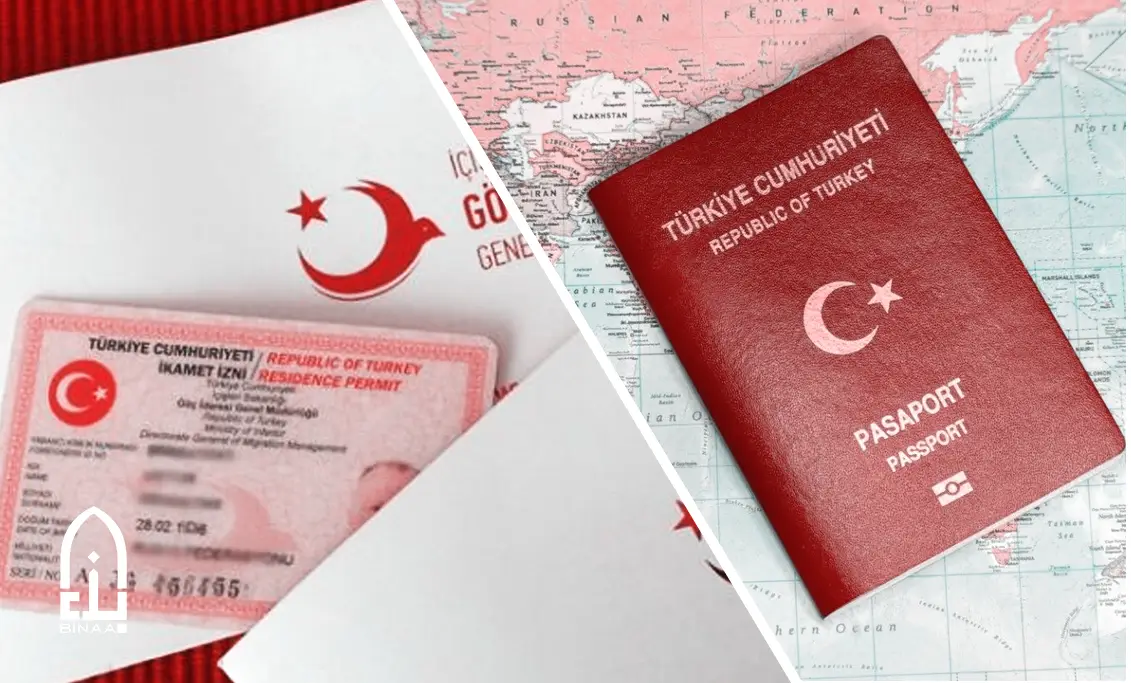



Turkey is one of the few countries in the world that still grants full citizenship for a single real estate transaction — and at $400,000, it is by a wide margin the lowest entry price among major economies. That fact alone has done most of the marketing for the program over the past eight years. But 2026 is the year the conversation shifts. The lira has stabilised, USD-denominated valuations are climbing, the central-Istanbul inventory eligible at the $400K floor is thinning, and the regulatory file has gotten slightly less forgiving.
Most articles you'll read about Turkish citizenship treat the program as a marketing line: travel-free destinations, family included, three months to a passport. All of that is true. None of it is the whole story. The whole story is that this is a real estate transaction first and a citizenship outcome second — and the investors who do well on both legs of the trade approach it that way from the start.
This guide is written for those investors.
What is Turkish Citizenship by Investment in 2026? A foreign national who purchases real estate with a Land Registry valuation of at least USD 400,000 and commits to a 3-year no-sale restriction qualifies for full Turkish citizenship — together with their spouse and all children under 18. The process typically completes in 3 to 6 months. Dual citizenship is permitted. Visa-free access extends to 110+ countries. No residency requirement applies.

Key Takeaways
- Minimum investment: USD 400,000 in real estate (Land Registry valuation, not asking price).
- Holding period: 3 years, annotated on the Tapu (title deed).
- Timeline: 3–6 months end-to-end for a clean file.
- Eligible asset types: Residential, commercial, office, land — all qualify.
- Family included: Spouse + all children under 18 at no extra investment.
- Tax residency: Not triggered unless the buyer spends 183+ days per year in Turkey.
- Remote purchase: The full process — including Tapu transfer — can be executed via Power of Attorney. Only the passport biometric requires in-person attendance.
- Realistic rental yield in central Istanbul: 5–8% gross on the property held during the lock-up.
- Single most common reason files fail: Land Registry valuation falling short of $400K, not application speed.
What the Program Actually Is — Beyond the Brochure?
The Turkish Citizenship by Investment program was introduced in 2017 under Article 12(b) of Citizenship Law No. 5901 and refined via Regulation 2018/106. The 2018 amendment dropped the threshold from $1M to $250K. The September 2018 revision lifted it back to $250K with a 3-year hold. The June 2022 amendment raised it to its current floor of $400,000. The 2024 zoning amendment added postcode-level restrictions in several Istanbul districts where over-issuance was creating market distortions.
Translation: the program has been actively managed by the Turkish state. It is not a "buy a beach house and call yourself Turkish" pathway. It is a structured, regulated, traceable investment route with specific compliance requirements that have tightened over time.
Four routes qualify a foreign national for citizenship:
Route | Minimum | Realistic uptake |
Real estate purchase | USD 400,000 (3-year hold) | ~85–90% of applicants |
Bank deposit | USD 500,000 (3-year hold) | Small, mostly compliance-driven |
Government bonds | USD 500,000 (3-year hold) | Small |
Venture capital fund | USD 500,000 (3-year hold) | Niche |
Job creation | 50 Turkish employees | Rare |
Real estate dominates for one reason: it's the only route where the locked-up capital is a productive asset. A bank deposit earns deposit rates. A property earns rent, can appreciate, and can be sold (with restrictions) after the lock-up.
Binaa Expert Insight: Almost every serious investor we work with in 2026 chooses the real estate route, but for very different reasons. Gulf HNW buyers want a Bosphorus-view branded residence — capital preservation first. Russian and Iranian investors increasingly want a yield-generating Asian-side apartment — passport plus income. European buyers tend toward central new-build with a clear exit. The same program, three quite different strategies.
Why a Turkish Passport Is Strategically Valuable in 2026?


This is where most guides get lazy. "Travel-free to 110+ countries" is repeated everywhere and analysed nowhere. The real value of the passport in 2026 sits in four specific, less-advertised places:
- The E-2 Investor Visa route into the United States. Turkey is one of a small group of countries whose nationals can apply for an E-2 visa — a treaty-based investor visa that allows the holder to live and work in the US while operating a US business. There is no equivalent for citizens of Russia, China, India, Saudi Arabia, the UAE, or much of Africa. For investors from those countries, a Turkish passport is one of the very few legal routes into the US that doesn't require lottery luck or EB-5's million-dollar threshold.
- Geopolitical hedging. For investors from sanctioned, politically volatile, or single-passport jurisdictions, the value isn't visa-free travel. It is optionality. Turkey allows dual citizenship — you don't renounce anything. The Turkish passport becomes a fallback document, a banking-relationship credential, and in some cases a child-mobility instrument.
- Banking access. A Turkish passport meaningfully widens access to European, Gulf, and offshore banking — not because Turkey is in any particular favoured club, but because it is not on most restricted lists. KYC friction drops noticeably.
- Generational planning. Children added to the file at under 18 carry the citizenship for life and can pass it to their own children. For families thinking in 20–30 year horizons, this is the part of the program with the highest compounding value.
What Most Investors Miss: The travel-free country list is interesting. The E-2 visa eligibility is structural. They are not the same kind of asset. If US access matters to you, the Turkish CBI is one of the cheapest legal pathways in the world. If it doesn't, the mobility value is real but more modest than the marketing suggests.
The $400,000 Rule — What It Actually Means in Practice
This is the part where buyers get hurt.
Citizenship eligibility is measured against the official Land Registry valuation in USD, not the contract price. The valuation is issued by an SPK (Capital Markets Board) licensed appraiser using the Central Bank of Türkiye exchange rate of the transfer day. The number on the contract and the number on the valuation are routinely different.
Reality Check: In the central-Istanbul districts we monitor (Şişli, Beşiktaş, Kadıköy, Ataşehir, Sarıyer), valuation variance against asking price commonly runs 4–12% in either direction during 2025–2026. Buying a property at exactly $400,000 is a bet you don't need to make. Build in a 7–10% valuation cushion or pick a different unit.
Other things the $400K rule means in practice:
- Multiple properties can be combined to reach the threshold — but they must all transfer on the same calendar day. Consecutive Tuesday-Wednesday transfers will be read as two sub-$400K transactions and disqualified.
- The 4% title deed transfer tax (typically split 2% buyer / 2% seller) sits on top of the $400K — that's another $8,000 for the buyer on a $400K transaction.
- Transaction overhead — translations, apostilles, legal, valuation, residency, insurance — runs roughly $14,000–$20,000 on a single-property file. Build the full stack into the budget before you start.
2026 Eligibility — The Honest Table
Requirement | 2026 rule | Common point of failure |
Minimum investment | USD 400,000 Land Registry valuation | Asking price ≠ valuation |
Holding period | 3 years, annotated on Tapu | Buyers underestimate enforceability |
Asset types | Residential, commercial, land, office | All qualify; not all are good investments |
Number of units | 1 or multiple combined | Multiple require same-day transfer |
Currency conversion | Mandatory at Central Bank of Türkiye | Skipping this kills the file |
Seller restrictions | No purchase from spouse, child, self, or previous Turkish-national ownership chain | Resale stock especially exposed |
Restricted zones | Some Istanbul postcodes post-2024 | Often not disclosed by sellers |
Family included | Spouse + all under-18 children | Document errors on children's certificates are common |
Residency required | No | None |
Dual citizenship | Permitted | None |
Source of funds | Verified | Documentation required upfront |
A more granular field-level breakdown of where exactly these rules trip buyers up sits in the common mistakes article — natural anchor for any phrase about file rejections.
The Process in 8 Stages — Compressed
A clean citizenship file passes through eight stages, summarised here. The dedicated step-by-step article covers the operational mechanics of each.
- Strategy & property eligibility pre-screen
- Turkish tax number + Turkish bank account
- SPK-licensed valuation in USD
- Sales contract + SWIFT transfer routed through Central Bank conversion
- Tapu (title deed) transfer with 3-year annotation
- Conformity certificate from the Ministry of Environment & Urbanisation
- Short-term investor residency permit
- Citizenship application + presidential decree
Binaa Expert Insight: Stages 2, 3, and 7 can be run in parallel — most self-managed files run them sequentially and lose 3–4 weeks of total timeline. The single highest-leverage optimisation in the entire process is moving these onto parallel tracks in week one.
Realistic Timeline — What 3 to 6 Months Actually Looks Like
The 3-month timeline is real but rare. The 6-month timeline is more common. The 9-month timeline shows up when documents are wrong.
Stage | Realistic working time | Failure mode |
Property selection + diligence | 2–4 weeks | Buyer indecision; restricted-zone surprises |
Tapu transfer + valuation | 1–2 weeks | Valuation shortfall |
Conformity certificate | 4–8 weeks | SWIFT/DAB errors, apostille gaps |
Residency permit | 1–2 weeks | Health insurance missing |
Citizenship decision | 8–12 weeks | Background check delays |
Total | 3–6 months | — |
ROI — What the Numbers Actually Look Like in Central Istanbul
The honest 2026 picture: a $400,000 investment in a 2-bedroom new-build in central Istanbul (Şişli, Kadıköy, Ataşehir) currently rents at roughly $1,800–$2,200 per month gross. Net of management fees, vacancy assumptions, and taxes, that's a 5–7% effective annual yield. Branded-residence buyers in Beşiktaş or Sarıyer typically get 4–5% gross with stronger capital appreciation and exit liquidity.
Over the mandatory 3-year hold, a reasonable base-case projection in central districts looks like this:
Year | Net rental income (USD) | Capital appreciation | Cumulative net return |
1 | ~$22,000 | 6–8% | $45–55K |
2 | ~$24,000 | 5–7% | $90–110K |
3 | ~$26,000 | 5–7% | $140–170K |
These are base-case numbers. Optimistic projections from agents quoting 10–12% combined returns are aggressive. So is the assumption of zero vacancy. Build in conservative assumptions.
Market Observation: Central Istanbul property in USD terms has outpaced inflation across most of 2024–2025 — but this hides significant district-level variance. Branded-residence stock in Beşiktaş has been the strongest performer. Outer growth-zone stock in Esenyurt and Başakşehir has been the most volatile. Treat any single yield number with caution. The yield-by-district breakdown sits in the most profitable Istanbul districts piece.
Tax & Legal — The Parts Investors Underestimate
Three points that consistently surprise buyers:
- Citizenship does not automatically make you a Turkish tax resident. Tax residency is triggered only if you spend 183+ days per year in Turkey. Most non-resident citizenship investors pay Turkish tax only on Turkey-sourced rental income, with double-taxation treaties (Turkey has 85+) covering the rest.
- Capital gains tax exemption applies after 5 years. If you hold the property beyond the 3-year citizenship lock-up and exit after year 5, capital gains are exempt for individual buyers.
- The 3-year sale restriction is legally enforceable, recorded on the Tapu, and policed at the Land Registry. It is not a guideline. Citizenship can be revoked for breach. There is no clever structure that gets around it — we've watched buyers try.
Remote Purchase — The Operational Reality
About 60% of the citizenship files Binaa Investment closed in 2025 were executed remotely. A notarised, apostilled Power of Attorney drafted in the buyer's home country authorises the appointed Turkish lawyer to handle everything from bank account opening to Tapu transfer to citizenship submission. The only physical-presence requirement is the final passport biometric, typically a 48-hour trip to Istanbul.
The remote process has friction points. Document apostilles in some jurisdictions take 3–4 weeks. Sworn translations must be done by Turkish-licensed translators, not the buyer's home-country notary. SWIFT receipts and DAB issuance need active coordination with the buyer's Turkish bank — not all branches treat the DAB as standard documentation, and some have to be reminded.
Turkey vs Other Programs — Honest Comparison
Program | Outcome | Min. property | Holding | Timeline | E-2 USA |
Turkey | Full citizenship | $400K | 3 years | 3–6 months | Yes |
UAE Golden Visa | 10-year residency | AED 2M (~$545K) | While held | 1–3 months | No |
Greece Golden Visa | Residency (citizenship after 7 yrs of residence) | €800K (Athens) | While held | 4–8 months | No |
Portugal | Closed to real estate since 2023 | n/a | n/a | n/a | n/a |
Caribbean (St Kitts, Grenada, Dominica) | Citizenship | $200–400K | 5–7 years | 4–6 months | Grenada only |
Turkey remains the only G20 economy granting full citizenship for a sub-$500K real estate purchase. For investors who want Gulf residency rather than a second passport, the Dubai Golden Visa comparison is the parallel reference.

FAQ — Turkish Citizenship by Investment 2026
Q: How much do I need to invest for Turkish citizenship in 2026? A: USD 400,000 in real estate, valued by an SPK-licensed appraiser at the Land Registry. The 3-year no-sale restriction is annotated on the title deed.
Q: How long does the process take? A: 3 to 6 months for a clean, well-prepared file. Self-managed files commonly take 6 to 9 months due to documentation issues.
Q: Can I sell after I get the passport? A: Not within 3 years of the Tapu date. The restriction is recorded on the Tapu and enforced by the Land Registry.
Q: Is rental income from the property taxable in Turkey? A: Yes — Turkey-sourced rental income is taxable in Turkey, but Turkey has double-taxation treaties with 85+ countries, so most investors aren't double-exposed.
Q: Can I include my family? A: Yes — spouse and all children under 18 at the time of application are included automatically.
Q: Can the entire process be completed remotely? A: Yes, via Power of Attorney, except for the final passport biometric, which typically requires a 48-hour trip to Turkey.
Q: Does Turkey allow dual citizenship? A: Yes. You retain your original passport.
Q: What is the single most common reason files get delayed or rejected? A: Land Registry valuation shortfall — the appraisal coming in below $400,000 — followed by SWIFT/DAB routing errors at the conformity certificate stage.
Q: Do I need to live in Turkey after citizenship? A: No. There is no residency requirement before, during, or after.
Q: Can I get an E-2 US investor visa with a Turkish passport? A: Yes — Turkey is a treaty country. This is one of the most under-discussed strategic benefits of the program.
Conclusion — A Mature Program, Best Used by Disciplined Investors
The Turkish Citizenship by Investment program in 2026 is a mature, well-regulated route into a strategically valuable passport — delivered alongside a real estate asset in one of Europe's fastest-growing urban markets. It is one of the most operationally efficient CBI programs in the world for buyers who run their files properly, and one of the most frustrating for buyers who don't.
The investors who win on both legs — the citizenship and the investment — are the ones who treat the property selection as a real investment decision first, the documentation work as upstream risk management, and the 3-year hold as a structural feature of the trade rather than a constraint to optimise around.
Binaa Investment has structured citizenship files for investors from over 40 countries. We own the property shortlisting, the valuation pre-screen, the SWIFT structuring, the document apostille, the Tapu transfer, and the citizenship submission in-house. Every step. Every document. The result: zero rejected files in our managed portfolio and a current average timeline of 3.5 months from contract to decree.
Start your file the right way. Book a free 30-minute strategy call with a Binaa Investment specialist. We'll map your investment goals against the right property profile, screen shortlist candidates for valuation cushion and zoning risk, and prepare your document checklist within 48 hours — in English, Arabic, or Turkish.