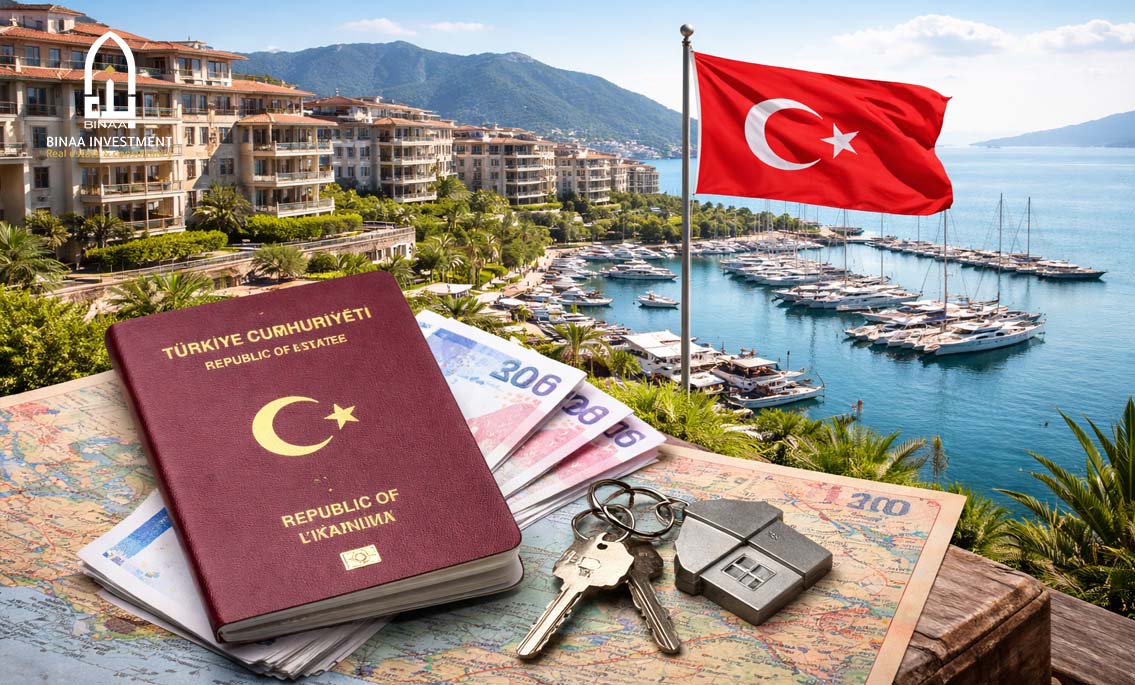


Turkish Citizenship by Real Estate Investment 2026 | Requirements, Steps & Best Projects
Introduction
Can you really obtain Turkish citizenship in just 3 to 6 months?
Yes — but only if the process is executed correctly 100%.
In this guide, we won't just explain the theoretical requirements and steps, but we'll show you how to choose the right property and how to avoid the mistakes that have caused thousands of applications to be rejected. If you're thinking about buying real estate in Turkey to obtain citizenship — this article will save you months of research and prevent you from losing your investment.
Get a free consultation now from our experts and discover the best projects available for you. Contact Us
How Much Do You Need to Obtain Turkish Citizenship?


$400,000 USD as a minimum through purchasing one or multiple properties, with a commitment not to sell for 3 years.
How Long Does the Process Take?
From 3 to 6 months from the date of submitting your citizenship application, provided all documents are complete and correct.
Can You Sell the Property After Obtaining Citizenship?
Yes — you can sell the property without losing your citizenship, but you must wait 3 years from the date of registration in the Tapu (title deed).
What is the Turkish Citizenship by Real Estate Investment Program?
The Turkish Citizenship by Real Estate Investment Program is an exceptional legal pathway launched by the Turkish government under Turkish Citizenship Law No. 5901, aimed at attracting foreign capital and direct investments to the Turkish real estate market.
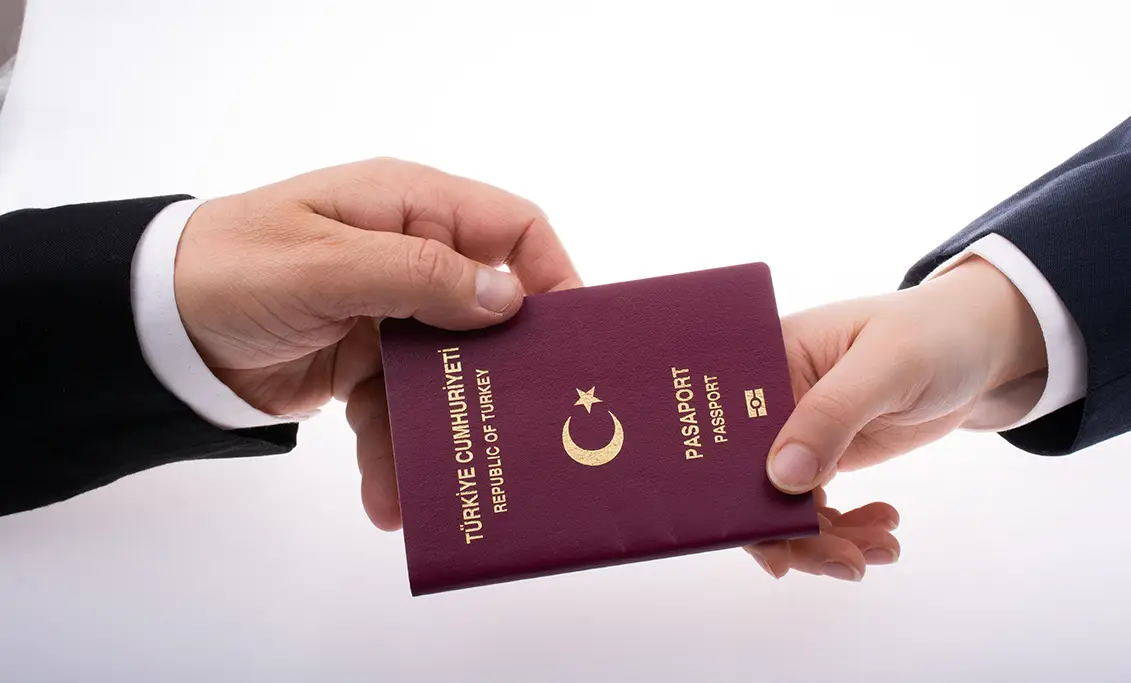
This program allows foreign investors to obtain full Turkish citizenship (including a passport) in exchange for purchasing one or multiple properties with a total value of at least $400,000 USD, with a commitment not to sell the property for 3 years from the date of registration in the Tapu.
What distinguishes this program is that it's not merely a real estate transaction, but rather a comprehensive investment framework that grants the investor and their family (spouse and children under 18 years old) full citizenship rights within Turkey, including the right to permanent residence, employment, education, and healthcare, with the possibility of retaining original citizenship (Turkey allows dual citizenship).
The Critical Difference: Real Estate Residency vs Turkish Citizenship
This distinction is crucial and must be understood precisely before making any investment decision:
Criterion | Real Estate Residency ($200K) | Turkish Citizenship ($400K) |
Investment Amount | $200,000 USD | $400,000 USD |
Turkish Passport | ❌ No | ✅ Yes |
Voting Rights | ❌ No | ✅ Yes |
Permanent Residence | ✅ Yes (renewable) | ✅ Yes (permanent) |
Required Duration | 5 years continuous residence | 3-6 months from application |
Non-Sale Requirement | None | 3 years |
Political Rights | Very limited | Full rights |
Summary: Real estate residency for $200,000 is a first step toward legal residence, but doesn't grant citizenship directly. Turkish citizenship through real estate investment for $400,000 is the direct and fastest program to obtain a passport and full citizenship.
Requirements for Obtaining Turkish Citizenship Through Real Estate Investment 2026
1. Minimum Property Value
As of 2026, the minimum real estate investment amount qualifying for Turkish citizenship is $400,000 USD. This amount must be:
•The total value of the property or properties (you can purchase one or multiple properties).
•Officially documented in an appraisal report issued by a government-approved valuation company.
•Paid through official bank transfer with complete documentation.
2. Approved Real Estate Appraisal Requirement
The real estate appraisal is not just a number, but a critical legal document that determines whether the property qualifies for citizenship. The appraisal must be:
•Issued by a valuation company officially approved by the Turkish Ministry of Interior.
•Reflecting the true market value of the property (no inflated valuation).
•Registered in the citizenship file as a primary document.
3. Non-Sale Commitment (Property Freeze)
One of the most important requirements is the official commitment not to sell the property for 3 years from the date of registration in the Tapu (title deed). This requirement aims to:
•Prevent short-term speculation and dummy investments.
•Support the stability of the Turkish real estate market.
•Ensure the investor's seriousness and program commitment.
After 3 years, the investor has the right to sell the property without any impact on their Turkish citizenship.
4. Personal and Legal Requirements
In addition to financial requirements, applicants must meet the following conditions:
•Age: Over 18 years old.
•Clean Criminal Record: No crimes or convictions within Turkey or abroad.
•Good Character: No involvement in activities threatening Turkish national security.
•Allowed Nationalities: All nationalities are permitted except a very limited number of countries under international sanctions.
Steps to Obtain Turkish Citizenship Through Real Estate (Step by Step)
Step 1: Choose the Right Property and Reliable Company
Before purchasing any property, you should select a reliable real estate and legal consulting company (such as Binaa Investment) with proven experience in citizenship applications. Their role includes:
•Legal examination of the property and ensuring the Tapu is free from complications.
•Verifying that the area is open to foreigners with no military restrictions.
•Selecting a property that generates good investment returns (reasonable purchase price, strategic location).
Step 2: Obtain an Official Real Estate Appraisal Report
After selecting the property, an official real estate appraisal report is issued by an approved company. This report determines:
•The true market value of the property.
•Whether the value meets the minimum requirement ($400,000).
•Details of the property, location, and specifications.
Step 3: Transfer Ownership and Register the Tapu
The property is registered in the investor's name in the Tapu Office (Turkish real estate registry) with a non-sale restriction for 3 years. This step requires:
•Notarization of the contract by an approved lawyer.
•Payment of required fees and taxes.
•Official registration of the non-sale commitment.
Step 4: Obtain the Conformity Certificate (Uygunluk Belgesi)
This document is the cornerstone of the citizenship application. Issued by Turkish government authorities, it confirms that:
•The property complies with citizenship program requirements.
•The registered value is correct and documented.
•All legal procedures were completed correctly.
Step 5: Submit the Citizenship Application
All documents (passport, birth certificate, criminal record, conformity certificate, etc.) are compiled and submitted to the Turkish Immigration and Citizenship Administration (Göç İdaresi Başkanlığı).
Step 6: Issuance of Naturalization Decision
The entire process typically takes 3 to 6 months from the application submission date. Upon approval, the following are issued:
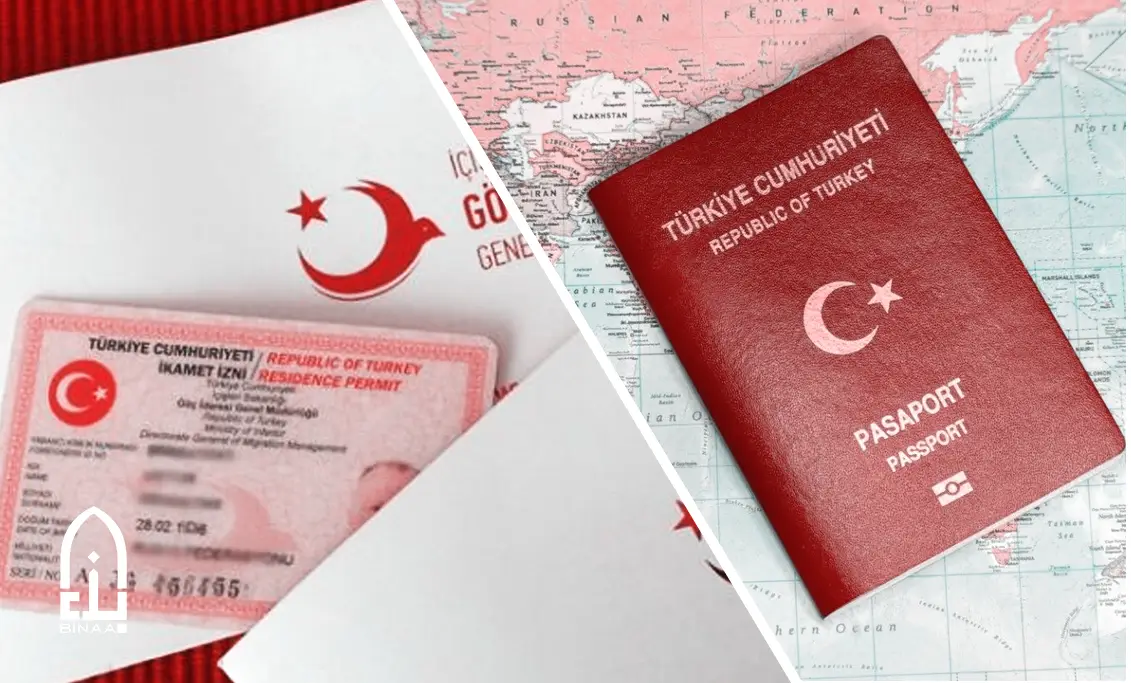
•Turkish Identity Card (Kimlik Kartı).
•Turkish Passport (Pasaport).
Benefits of Turkish Citizenship for the Investor
1. Strong and Practical Passport
The Turkish passport allows entry to over 110 countries without a visa or with a visa on arrival. This includes:
•European Union countries (visa-free for 90 days).
•Gulf and Middle East countries.
•Major Asian countries.
2. Retain Your Original Citizenship
Turkey allows dual citizenship, meaning you don't have to give up your original nationality. Discover more about the complete benefits of Turkish citizenship and its advantages.
3. Right to Permanent Residence and Employment
Once you obtain citizenship, you enjoy:
•Permanent residence without time restrictions.
•Right to work in any sector without special permits.
•Right to establish businesses and investments.
•Access to Turkish education and healthcare systems.
4. Active and Growing Real Estate Market
Real estate in Turkey is not just an investment for citizenship, but a genuine investment asset that offers:
•Capital appreciation: Average 5-8% annually (especially in Istanbul).
•Rental returns: 4-6% annually.
•Continuous demand: From foreign and local investors.
Best Turkish Cities for Real Estate Investment Qualifying for Citizenship
Istanbul: The Economic Capital
Istanbul is the first choice for most investors for obvious reasons:
•Strategic Location: Located on the Bosphorus between Europe and Asia.
•Strong Economy: Turkey's largest economic and tourism center.
•Project Diversity: From luxury apartments in Beşiktaş to investment projects on the Asian side.
•Investment Returns: Highest growth rates and rental returns.
Antalya: Tourism Investment
Antalya is ideal for investors seeking rental returns from tourism:
•Tourism Demand: Millions of tourists annually.
•Seasonal Returns: High rental returns during summer season.
•Affordable Prices: High-quality properties at lower prices than Istanbul.
Ankara and Izmir: Long-Term Stability
These two cities offer:
•Economic Stability: Stable and secure markets.
•Reasonable Prices: Investments at lower values with steady returns.
•Safe Areas: Quiet and safe residential areas for families.
Common Mistakes Leading to Citizenship Application Rejection
Mistake 1: Inflated Property Valuation
Some unethical brokers inflate property values in the report to facilitate citizenship approval.
Solution: Deal exclusively with reputable and approved companies, and obtain an independent appraisal from another valuation firm.
Mistake 2: Incomplete or Unqualified Projects
Some projects may not meet citizenship requirements (such as military-restricted areas).
Solution: Ensure the project is in an area open to foreigners and obtain written approval from government authorities.
Mistake 3: Unlicensed Brokers
Unreliable brokers may expose you to legal problems.
Solution: Deal only with officially licensed real estate companies and verify their license and commercial registration.
Mistake 4: Delayed Document Submission
Delays in submitting the application or incomplete documentation lead to rejection.
Solution: Work with a specialized company that monitors the file regularly and ensures all documents are complete.
Frequently Asked Questions (FAQ)
Q: How long does it take to obtain Turkish citizenship through real estate?
A: From 3 to 6 months from the date of submitting your citizenship application, provided all documents are complete and correct.
Q: Can you obtain citizenship with $200,000?
A: No. The minimum for direct citizenship is $400,000. With $200,000, you can obtain real estate residency only, then apply for citizenship after 5 years of residence.
Q: Can you sell the property after obtaining citizenship?
A: Yes, but you must wait 3 years from the date of registration in the Tapu. After that, you can sell the property without any impact on your citizenship.
Q: Does Turkey allow dual citizenship?
A: Yes, Turkey allows retaining your original citizenship while obtaining Turkish citizenship.
Q: How many countries can you enter with a Turkish passport without a visa?
A: Over 110 countries, including European Union countries (for 90 days) and Gulf countries.
Q: Are there additional fees besides the property price?
A: Yes, there are Tapu registration fees and legal fees. These typically range from 5-10% of the property value.
Q: Can you purchase multiple properties instead of one?
A: Yes, you can purchase multiple properties as long as the total value is at least $400,000.
Detailed Naturalization Stages
To understand the process in greater depth, you can review the detailed stages of naturalization in Turkey and complete legal details.
Why Choose Binaa Investment?
Binaa Investment is not just a real estate company, but a trusted partner in your investment journey. We offer:
•10+ years of experience in international real estate investment.
•Specialized legal team that monitors citizenship applications from start to finish.
•Approved projects that meet all citizenship program requirements.
•Free consultation to assess your investment situation.
•Comprehensive follow-up from property selection to passport issuance.
Get a Free Consultation Now
Our team will identify the best property qualifying for citizenship within 24 hours only. Contact Us Now via:
•📞 Direct Call
•💬 WhatsApp
•📧 Email
Conclusion
Turkish citizenship through real estate investment in 2026 represents a genuine investment opportunity for investors seeking a combination of financial returns, legal stability, and geographic flexibility.
With proper planning, choosing the right property, and working with a reliable company like Binaa Investment, this program can be one of the strongest long-term investment decisions in your life.
Don't hesitate to contact us today. Our team is ready to help you at every step of your journey.
Additional Information
For more detailed information about:
Contact us now and start your journey toward Turkish citizenship and successful investment.