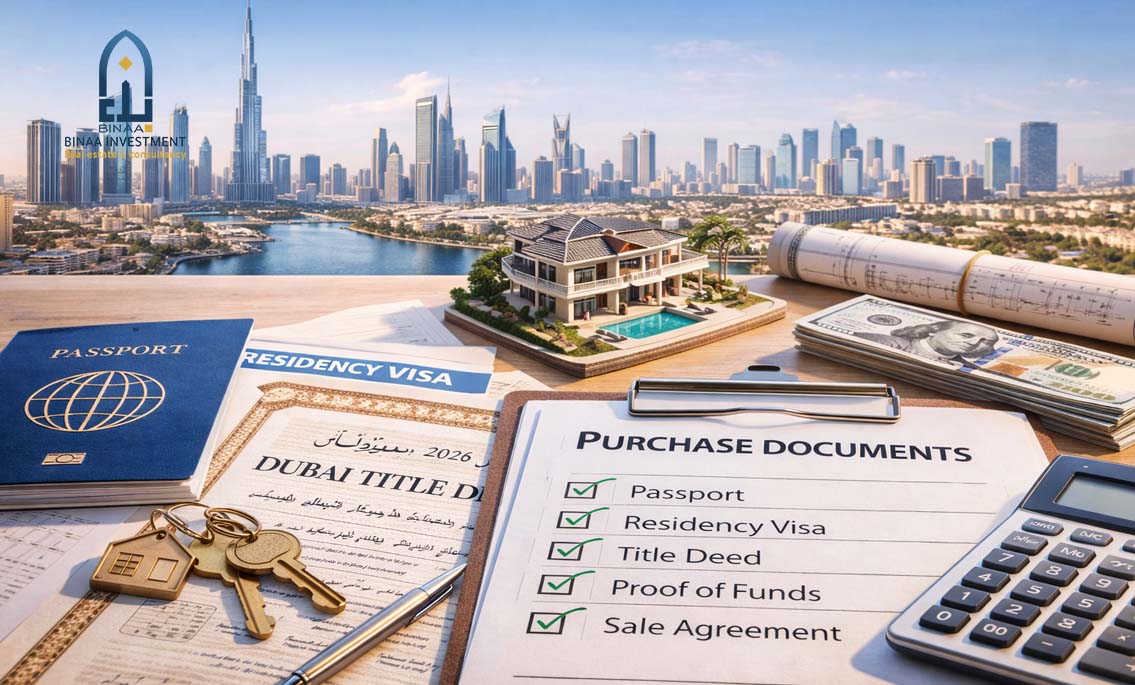


Documents Required to Buy Property in Dubai as a Foreigner (2026 Checklist)
Dubai remains one of the most attractive destinations for foreign property investors. With its tax-free environment, world-class infrastructure, and strong real estate growth, investors from across the globe are actively seeking opportunities in residential and commercial projects. However, purchasing property as a foreigner requires careful preparation and compliance with legal documentation. Missing or incomplete documents can delay transactions or even prevent ownership.
This comprehensive 2026 checklist outlines all the essential documents foreign buyers need to successfully purchase property in Dubai. Whether you are buying a villa, apartment, or commercial unit, understanding the paperwork required will save time and ensure a smooth transaction.
1. Valid Passport Copy
Every foreign buyer must provide a clear copy of their passport. The passport serves as the primary identification document for all real estate transactions and legal approvals in Dubai.
Tips:
Ensure your passport is valid for at least six months.
Include both the photo page and visa page if applicable.
2. UAE Entry Visa or Residency Visa (If Applicable)


While foreign investors can purchase property on a tourist visa, having a UAE residency visa simplifies the process and allows easier access to bank accounts, mortgage approvals, and title deed registration.
Notes:
Some freehold areas may require proof of residency.
Investors using a tourist visa must still comply with developer and Dubai Land Department (DLD) requirements.
3. Emirates ID (For Residents)
Foreign buyers with a UAE residence visa must provide their Emirates ID. This document is used for official verification and registration in government systems, including the DLD property registry.
4. Proof of Address
Foreign buyers need to provide proof of their current residential address in their home country. Acceptable documents include:
Utility bills (electricity, water, or gas)
Bank statements showing the home address
Tenancy contract or rental agreement
This is required for AML (Anti-Money Laundering) compliance and to complete property registration.
5. Bank Reference Letter or Financial Statement
Most developers and banks in Dubai request proof of financial capability. This may include:
Bank reference letter confirming your account and good standing
Recent bank statements for the last 3–6 months
Proof of funds if paying in full
This demonstrates your ability to pay the property price, especially if using cash or seeking mortgage financing.
6. Power of Attorney (If Buying Remotely)
If you cannot be physically present in Dubai during the property purchase, you can authorize a trusted representative through a notarized Power of Attorney (POA).
Key Points:
POA must be attested by your home country authorities and the UAE embassy.
The representative can sign contracts, register the property, and handle payments on your behalf.
7. Initial Deposit / Booking Confirmation
Developers require proof of initial deposit payment or booking confirmation when reserving a property. Typically, this is:
5–10% of the property value
Paid via bank transfer or certified check
This confirms your intent to buy and initiates the sales process.
8. Sales and Purchase Agreement (SPA)
The SPA is the official contract between the buyer and the developer or seller. It outlines the terms, payment plan, delivery schedule, and legal obligations.
Tips for SPA Review:
Ensure all payment milestones and completion dates are clear
Check for clauses related to delays, penalties, or cancellation
Engage a legal advisor or real estate consultant to review the SPA
9. Mortgage Pre-Approval (If Applicable)
Foreign buyers planning to finance the purchase through a UAE bank must provide a mortgage pre-approval. Required documents generally include:
Passport copy
Visa copy (if resident)
Proof of income (salary certificate, tax return, or bank statements)
Credit history
Mortgage pre-approval speeds up the financing process and ensures compliance with DLD requirements.
10. Developer-Specific Documents
Some developers may request additional documents depending on the project type or investor profile, including:
Employment certificate
Company registration for corporate buyers
Investment proof for off-plan projects
It is essential to check with the developer before initiating the purchase.
11. Dubai Land Department (DLD) Requirements
All property transactions must be registered with the DLD. For registration, you will need:
Completed application form
Copies of buyer and seller passports
Proof of payment for fees (4% transfer fee of property price)
Title deed issuance documentation
The DLD ensures legal ownership is properly transferred and recorded.
12. Translation and Attestation
Any documents not in Arabic or English must be translated by a certified translator and attested by the UAE embassy in your home country. This ensures smooth registration with both the developer and DLD.
Tips for a Smooth Property Purchase in Dubai
Keep all documents ready: Ensure passports, visa copies, bank statements, and proof of funds are current and accurate.
Hire a professional real estate consultant: Experienced agents guide buyers through legal, financial, and administrative procedures.
Engage a legal advisor: They can review contracts, mitigate risks, and ensure compliance with UAE property laws.
Verify developer credentials: Check the project is registered with DLD and the developer has a strong track record.
Plan for additional costs: Be prepared for DLD fees, agent commissions, and service charges.
Conclusion
Buying property in Dubai as a foreigner in 2026 requires careful preparation and the right set of documents. Ensuring all paperwork—from passport copies to sales agreements and DLD registrations—is complete helps avoid delays, legal issues, or transaction complications.
By following this checklist, foreign investors can confidently navigate Dubai’s property market, secure ownership, and benefit from the emirate’s thriving real estate sector.